
Bangkok, the capital city of Thailand, is a large metropolis with plenty of public transport and private ride options that can be used to explore the city as well as to travel to any other destination in Thailand. Discover a detailed guide to public transport in Bangkok that covers metro, bus, water transport, taxi, and intercity travel by air, train, and bus.
Public Transport in Bangkok
Public transport in Bangkok consists of several metro systems (underground, elevated, and commuter trains), different types of public bus service, a local means of transportation called songthaew, as well as water transport with various public river and canal boat services.
Bangkok Metro
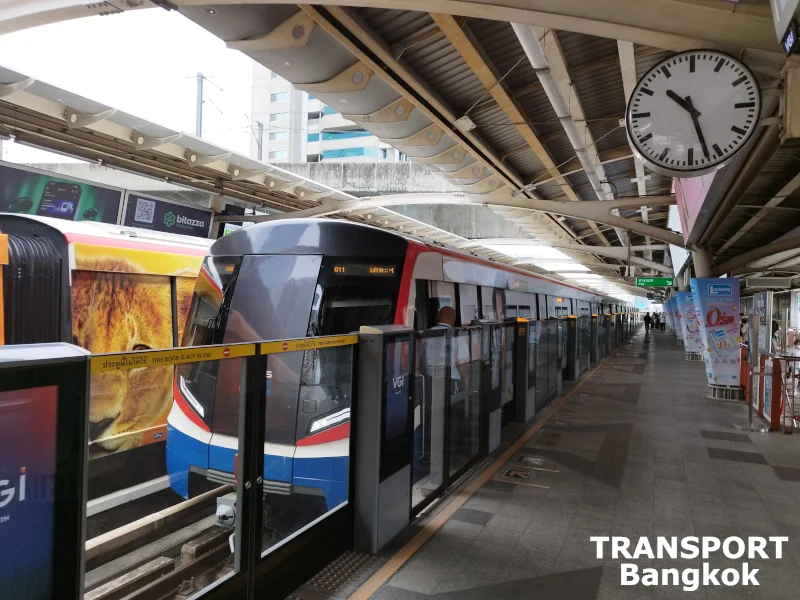
Public transport in Bangkok is decently developed, as the city is served by several Bangkok metro systems. Passengers can use 4 elevated train (Skytrain) systems, the underground MRT, the Bangkok Airport train called Airport Rail Link, and the commuter SRT Red Line train. New metro lines and line extensions have recently expanded the mass rapid transit network in the capital of Thailand, with more of them currently underway.
Bangkok Bus
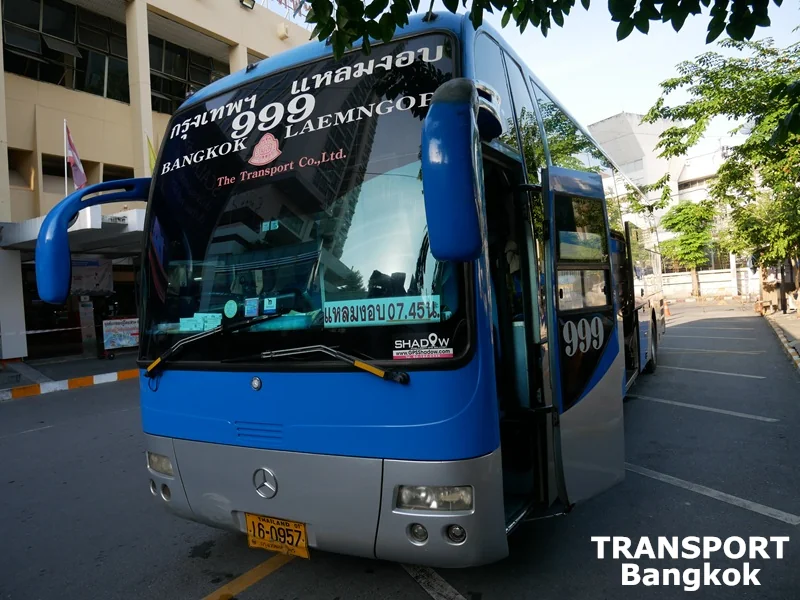
Even if the metro network in Bangkok is quite large and still expanding, it won’t let you reach all the desired destinations. At this point, another important means of Bangkok public transport – the Bangkok bus – becomes handy and lifts your local traveling experience to another level. Numerous Bangkok bus routes make reaching more distant areas of the city possible.
In addition to the usual buses, some routes in Bangkok are served by a local bus type - a pickup truck with two rows of seats at the back, locally called a songthaew (two rows). In Bangkok, songthaews follow fixed routes that are usually shorter than bus routes and have set fares.
Bangkok Water Transport
Bangkok water transport still plays an important role in the public transport system in the Thai capital city. As a tourist, you can charter a boat and explore the city’s canals or join one of Bangkok's river cruises on the mighty Chao Phraya River to combine dining and sightseeing. However, the most fun way to explore the waterways of the Thai capital is by joining locals on public water transport. There are regular public boat and ferry services on the Chao Phraya River and on several of the largest canals in Bangkok.
Bangkok Public Transport Tickets
Bangkok public transport tickets can be purchased at the place, and in most cases you need to pay for the ticket in cash.
The city's public transport doesn't have one ticketing system, but at least on the most popular systems, such as the BTS and the Chao Phraya Express Boat, you can use the Rabbit Card to pay the fare. With this card, you can save lots of time that is normally wasted in lines for buying single-trip tickets.
If you will be using the electric bus and boat service several times a day, get Thai Go Day Pass that covers all Thai Smile Bus routes as well as Thai Smile Boat routes.
Private Rides in Bangkok
Several types of private rides supplement the public transport in Bangkok. In the capital city of Thailand, you can use the metered taxi, motorbike taxi, one of the ride-hailing apps, or even a tuk-tuk.
Bangkok metered taxis can be a comfortable and affordable way to get around the capital city of Thailand. Tens of thousands of brightly colored taxis can be hailed on the streets of Bangkok.
In Bangkok, you can see motorbike taxi drivers on the corner of the street or at larger condominium complexes. They are identified by colored vests with numbers and provide the service at the specific spot they are assigned to. Motorbike taxis are mainly used just for journeys up and down the soi (side street) or to the stop of the public transport.
A private ride by a taxi, motorbike taxi, or private car in Bangkok can also be booked by using one of the ride-hailing apps available in the city. Grab is the most popular app in Bangkok, but you can also use the Bolt and Line Man apps that often offer a better deal than Grab. If you use a ride-hailing app to book a taxi, an additional 20 THB is normally added to the calculated meter fare.
The three-wheeled, open-sided tuk-tuk is the classic Thai vehicle that can be found on the streets of Bangkok, especially in the areas frequently visited by tourists. Tuk-tuks in Bangkok are mainly serving as an attraction for foreign visitors, as the price of a ride on a tuk-tuk here is often higher than the metered taxi rate. Overcharging is also quite common with tuk-tuk drivers, so you should always agree on a fare before setting off.
The safest way to experience tuk-tuks as the means of public transportation in Thailand's capital city is using the service of Hop-on Hop-off Tuk-Tuk.
Intercity Transport from/to Bangkok
Bangkok is the largest city and the main transport hub in Thailand. Therefore, you will never be short of options for traveling to Bangkok or for getting from Bangkok to any destination in Thailand by different means of transport. Discover the main intercity transport options for traveling from or to Bangkok.
Airports in Bangkok
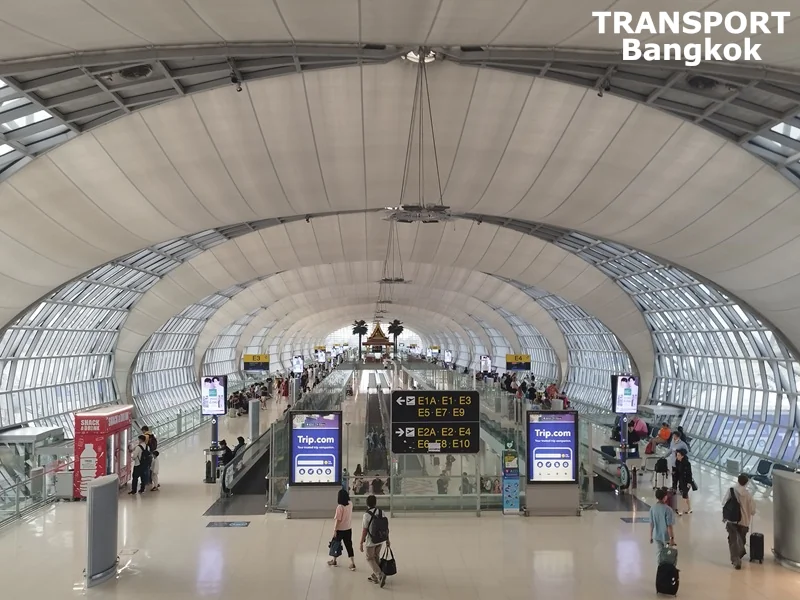
There are two international airports in Bangkok.
Suvarnabhumi Airport (BKK) is Thailand’s main travel hub that is mostly used for long-haul and full-service flights. However, an increasing number of domestic flights are available at BKK Airport.
Don Mueang Airport (DMK) is the second airport in Bangkok, which is well connected with all the main destinations in Thailand and other Southeast Asian countries by low-cost carriers.
Bus Stations in Bangkok
There are 3 main bus terminals in Bangkok, and you need to choose one depending on your desired destination, as each of them mainly serves specific regions.
Mochit Bus Terminal (Northern Bus Terminal) is the largest bus station in Bangkok. It is used by buses and vans departing to the provinces in Northern Thailand (Chiang Mai, Sukhothai, and Chiang Rai), Northeast Thailand, and a few other central and eastern destinations such as Ayutthaya, Lopburi, Chonburi (including Pattaya), Trat (including Koh Chang), and others. Minibuses and vans leave from the nearby Mochit Van Terminal.
Ekkamai Bus Terminal (Eastern Bus Terminal) is mainly serviced by buses and vans running to the provinces in Eastern Thailand, such as Rayong, Chonburi, Trat, and Chanthaburi, and tourist destinations such as Pattaya, Sriracha, Sattahip, Koh Chang, and Koh Samet.
Sai Tai Mai Bus Terminal (Southern Bus Terminal) is served by buses and minivans departing to the provinces in Southern Thailand, such as Phuket, Krabi, and Surat Thani, and provinces in Central Thailand, such as Kanchanaburi, Samut Songkhram, and others.
Railway Stations in Bangkok
As Bangkok is the capital city, which is centrally located, all the main Thailand train lines start at the railway stations of the city.
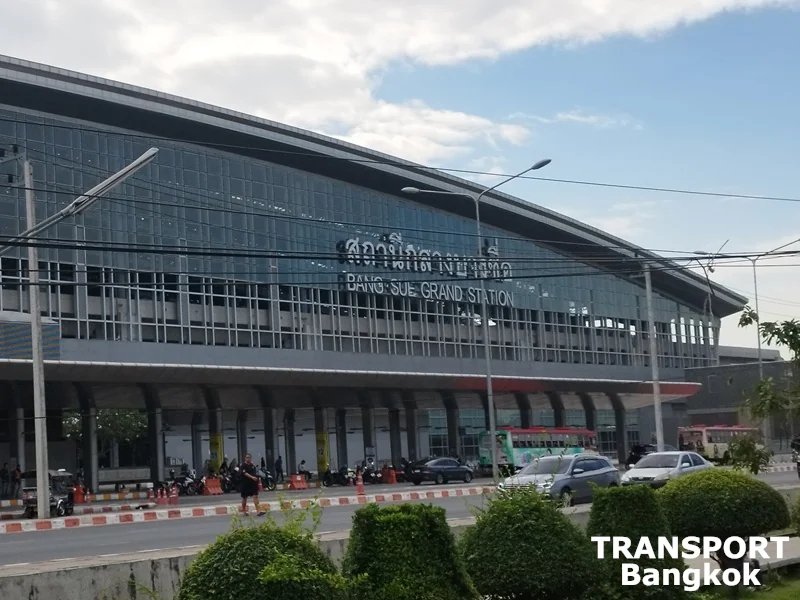
Krung Thep Aphiwat Central Terminal is currently the main railway station in Bangkok. Here you can now board most of the long-distance trains traveling from Bangkok to different regions of Thailand.
However, there are still several ordinary trains a day that depart from Hua Lamphong Railway Station, which served as the main train station of the city for many years and therefore is known as Bangkok Railway Station.
Thonburi Railway Station, which is located on the western side of the Chao Phraya River, is another railway station in Bangkok that serves ordinary trains. The railway line that goes to Kanchanaburi and the River Kwai starts here.
All the above-mentioned railway stations are the terminal stations on the line. Most of the trains also make a stop at other Bangkok railway stations along the route. Therefore, you can board northbound trains at Don Mueang Railway Station and Rangsit Railway Station or eastbound trains at Asoke Railway Station.
Transport Tickets
Tickets for all kinds of intercity transport from Bangkok or to the capital city can be booked by using this search form.